
Bachelor of Computer Engineering with Honours
Bachelor Degree
Free consultation for this program
We are ready to help you with your difficulties and processing.
Duration
4 years
Study Format
On Campus
No. of Student Mentors
73
Total Tuition Fees
30,980 USD (Approx)





Free consultation for this program
We are ready to help you with your difficulties and processing.
Duration
4 years
Study Format
On Campus
No. of Student Mentors
73
Total Tuition Fees
30,980 USD (Approx)
Program
Key information
University
Program structure
Tuition fees
Admissions
Possible Career Pathway
Student's testimonials
F&Qs
ABOUT THIS PROGRAM
PEO & PLO
Programme Educational Objectives
- Be a practicing engineer contributing to the development of Computer or Electronic Engineering while demonstrating professionalism.
- Pursue engineering innovation via career advancement opportunities and/or advanced studies in Computer or Electronic Engineering.
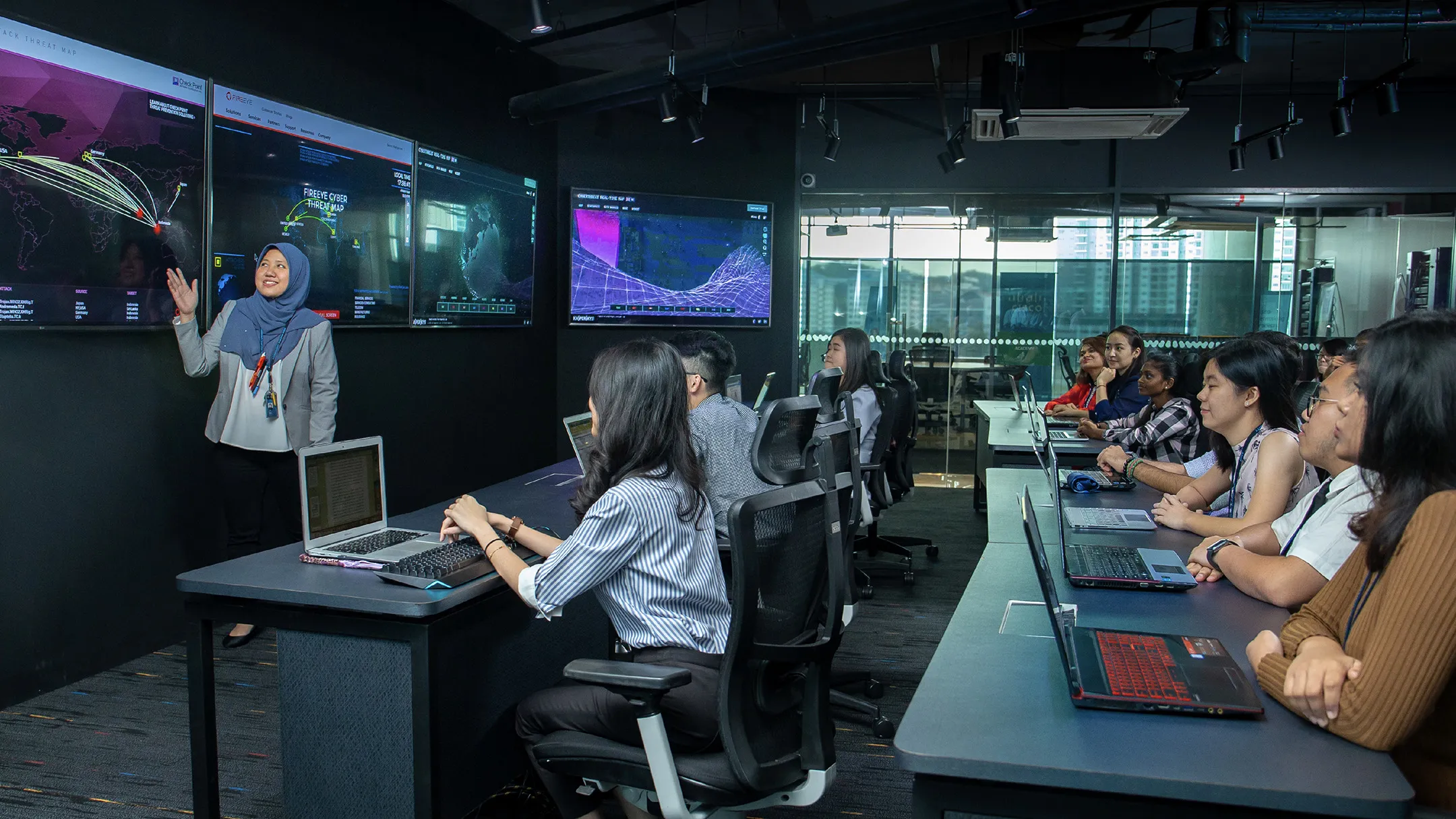
- Computer engineering has emerged as a driving force addressing numerous global demands like smart grids, cognitive buildings, energy management and the likes. Operating platforms for more and more applications have been migrating to the cloud in recent days. Bridging the gap between hardware and software, are Computer Engineers, advancing computer technology towards transforming more and more of these cyber dreams into realities. Some of the areas covered in this major are:
- Digital Logic Design
- Computer Networks
- Embedded and Desktop Operating Systems
- Microcontroller Selection and Programming
- Signal Processing
Programme Learning Outcomes
Programme Outline
What We Teach
This programme is specifically designed to provide students with:
- High-quality undergraduate engineering education by providing students with a curriculum that is firmly grounded in Computer engineering fundamentals.
- A study in the area of computer engineering which covers networking, database management, security systems, cloud infrastructure and data analytics.
KEY INFORMATION
Degree
Bachelor
Language
English
Location
Malaysia
Intake Start Date
Apr 2026
Study Format
On Campus
Duration
4 years
Program Highlight
Dual Degree
Total Semester
9
Total Tuition Fees
30,980 USD (Approx) / in total
Application deadline
May 2026
ABOUT UNIVERSITY
Asia Ranking 2026
EduRank Ranking 597
Programs
125
Students
14,000
Asia Pacific University (APU) continues to solidify its reputation for graduate employability, achieving a remarkable 100% employment rate among its graduates. In recognition of its excellence, APU was named the 2025 Employers’ Choice of University in Talentbank’s annual national survey of top employers. Furthermore, APU graduates earned a prestigious 6-Star rating in the Employers' Top Choice categories for Computing & IT, Animation, Advertising, Finance, and Marketing.
APU also maintained its leading position as the Champion in the Computing & IT category nationwide. In the previous year, 2024, APU graduates were similarly recognized as Champions in Employers’ Top Choice for Computing & IT, Game Design and Development, Animation, and Finance & Islamic Finance - a testament to APU’s sustained excellence and industry relevance across multiple disciplines
APU is honoured to receive the Future-Ready University & College award in the private universities category at the LIFE AT WORK Awards 2025, organised by Talent Corporation Malaysia (TalentCorp).
This award recognises a Higher Educational Institution that goes beyond academic excellence to actively prepare their students for the realities of a dynamic, fast-changing workforce. This institution demonstrates a strong commitment to bridging the gap between education and career readiness.
This recognition reflects APU’s commitment to nurturing a future-ready generation through an inclusive, innovative, and supportive environment that prepares both students and staff to succeed in the evolving digital landscape.
See more
PROGRAM STRUCTURE
Degree Level 1
Students will understand the basic principles of engineering in the areas of Circuit Analysis, Instrumentation & Measurement, C Programming, Programming with Python, Engineering Materials, Engineering Design and Networking. Other modules aim to provide the basic demands of employers, as well as thorough grounding in principles of IT and entrepreneurship. Important and relevant skills for managing activities and for their own independent learning are also introduced.
Common Modules
- Instrumentation & Measurement
- Engineering Materials
- Programming with Python
- Engineering Mathematics 1
- Introduction to C Programming
- Engineering Mathematics 2
- Analysis of Circuits
- Fundamentals of Entrepreneurship
Specialised Modules
- Introduction to Networking
Degree Level 2
Here, students start specialising in modules that develop the necessary underlying knowledge and skills in Computer Engineering with modules such as Electromagnetic Field Theory, Engineering Software & Applications, Analogue Electronics, Digital Electronics, Signals & Linear Systems, Introduction to Electrical Systems, Object Oriented Development with Java and Human Computer Interaction. Engineering Mathematics is provided for better understanding of the engineering modules.
Common Modules
- Digital Electronics
- Introduction to Electrical Systems
- Engineering Mathematics 3
- Engineering Software & Applications
- Innovation Process
- Analogue Electronics
- Electromagnetic Field Theory
- Signals & Linear Systems
Specialised Modules
- Human Computer Interaction
- Object Oriented Development with Java
- Fundamentals of Integrated Circuits Design
Degree Level 3
Specialised knowledge and skills in the areas of Control Engineering, Communication Engineering Principles, VLSI Design, Microprocessor Systems and Embedded Software, Digital Signal Processing, Modern Communication Systems and Machine Vision & Intelligence are the critical focus of this level. There is further development of the ability to apply relevant engineering skills with strong critical thinking and analysis. Independent learning continues in all modules.
Common Modules
- Control Engineering
- Engineering Mathematics 4
- Communication Engineering Principles
- Venture Building
- Microprocessor Systems & Embedded Software
- Digital Signal Processing
- Engineering Project Management
Specialised Modules
- Modern Communication Systems
- VLSI Design
- Analogue Integrated Circuits & Systems
In the 2nd Semester of Year 3
Minor/ Extension Pathway (Choose 1)
- Choose 1 module from Minor Pathway OR Extension Pathway as a continuation from the module selected in Year 3 Semester 2 as described in the table below.
Internship (16 Weeks)
Students will undertake an Internship/Industrial Training for a minimum period of 16 weeks to prepare them for a smooth transition from the classroom to the working environment.
Degree Level 4
The final year Engineering modules provide the necessary industry application and technological skills which become very useful for employment upon graduation. Students’ personal and professional development, technical capability and understanding of how to innovate, generate and manage the creation of new ideas will be enhanced. Students will deliver several Engineering Projects where they will demonstrate higher level critical thinking, analysis and solutions development skills which will enhance their employability.
Common Modules
- Project Phase 1 (Investigation)
- Group Design Project 1
- Project Phase 2 (Implementation)
- Engineer in Society
- Group Design Project 2
Specialised Modules
- Computer Systems Security
- User Experience
Minor / Extension Pathway (Continuation)
- Choose 1 module from Minor Pathway OR Extension Pathway as a continuation from the module selected in Year 3 Semester 2 as described in the table below.
Computer Engineering Minor/Extension Pathways
Future Proof Engineers for the Real World
In APU, employment and it’s continual sustainability is of paramount importance to us. The range of minor and extensions offered to all students within the School of Engineering will craft a formidable way forward for the young aspiring engineers of tomorrow. These options allow students to embark on a journey of exploration either within the engineering fraternity by extending into greater depth (extensions) niche knowledge, skills and attributes required for the practice of contemporary engineering or explore wider options (minor) that are pivotal in the fundamental proliferation of the engineering profession as a while when coupled with other current multidisciplinary fields of expertise. Successful completion of either pathways future proof the students allowing them to embark on a journey of rewarding careers within an engineering discipline of their choice.
Minor Pathway – Gain breadth of knowledge by taking 3 set modules outside of a particular major field of study. There are minor packages available undertaken from Year 3 Semester 2 Year 4 Semester 1 and Year 4 Semester 2.
MINOR PATHWAY
NAME OF MINORYear 3 Semester 2Year 4 Semester 1Year 4 Semester 2Digital Age PsychologyHealth PsychologyHuman Factors PsychologyCyberpsychology
Extension Pathway – Expand depth of knowledge by taking three (3) set modules in a specific area within a certain field of study. There are extensions available undertaken from Year 3 Semester 2, Year 4 Semester 1 and Year 4 Semester 2.
EXTENSION PATHWAY
NAME OF EXTENSIONYear 3 Semester 2Year 4 Semester 1Year 4 Semester 2Cloud ComputingDesigning and Developing Applications on CloudCloud Infrastructure and ServicesEmergent TechnologyIoTKnowledge Discovery and Big Data AnalyticsInternet of Things: Concepts and ApplicationsEmergent TechnologyFinTechFinTech Governance, Risk Management & ComplianceDigital FinanceRobo AdvisorDigital TransformationDigital ExecutionDigital Strategy & AnalyticsEmergent TechnologyData AnalyticsKnowledge Discovery and Big Data AnalyticsBehavioral Science and Marketing AnalyticsOptimization & Deep LearningArtificial IntelligenceMachine Vision Intelligence (MVI)Text Analysis & Sentiment AnalysisEmergent TechnologyEV TechnologyMachine Vision IntelligenceEV Energy Management StrategiesAutomotive Vehicle Modelling5G Wireless TechnologyMachine Vision Intelligence5G Concepts and ApplicationsEmergent TechnologyPrompt EngineeringMachine Vision IntelligencePrompt Concepts and ApplicationsDeep LearningIC Design and ManufacturerAnalogue Integrated Circuits and SystemsComputer Aided Design/ Computer Aided ManufacturingAnalogue and Digital Integrated Circuit Design
MQA Compulsory Subjects*
- Appreciation of Ethics and Civilisation (M’sian Students)
- Malay Communication Language (Int’l Students)
- Philosophy and Current Issues
- Workplace Professional Skills
- Integrity and Anti-corruption
- Co-Curriculum
TUITION FEES
Tuition fees
30,980 USD (Approx) / in total
Application fees
3,350 MYR
Application fee cannot be refunded.
Get a Free Consultation!
Not sure where to start with your application?
Our student ambassadors can walk you through the admission process, step by step.
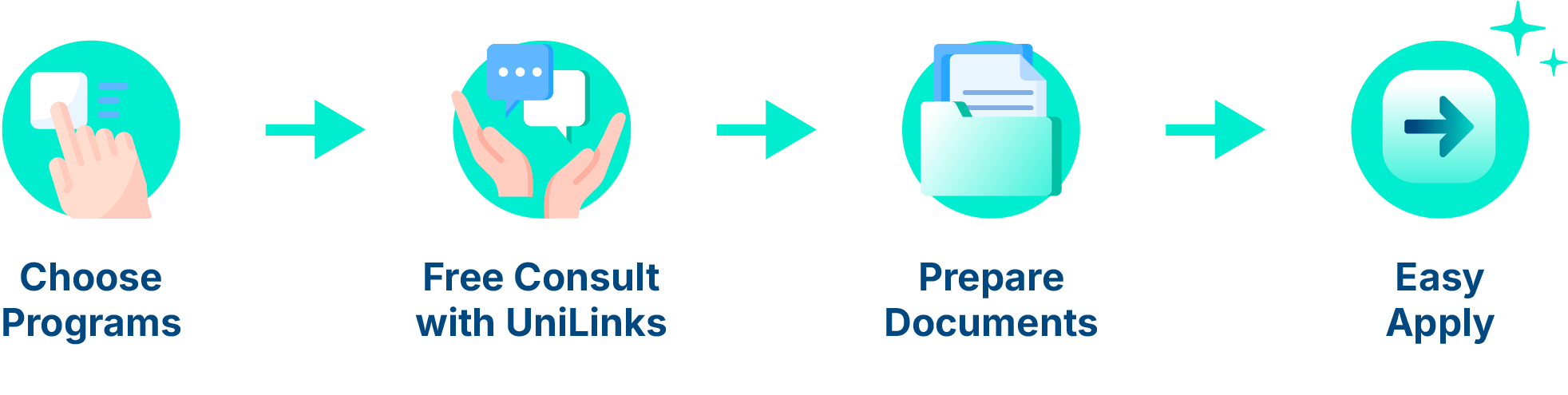
ADMISSIONS PROCESS
Admission Requirements
General Requirements
Direct Entry to Level 1 of the Degree
- STPM2 Passes in STPM with a minimum Grade C (GP 2.0) in Mathematics and Physics (or Chemistry), and a Credit in Mathematics and Physics (or Chemistry) at SPM Level or its equivalent.
- A-Level2 Passes (Grade A-D) in A-Level including Mathematics and Physics (or Chemistry).
- UEC5 Grade B’s in UEC, including Mathematics and Physics (or Chemistry).
- Matriculation/ FoundationPassed the relevant Foundation programme (minimum CGPA of 2.0) with a Credit in Mathematics and Physics (or Chemistry) at SPM/O-Level/IGCSE or equivalent.
Entry to Level 2 of the Degree
- DiplomaSuccessful completion of the APU/APIIT Engineering Diploma and fulfilment of requirements for Credit Transfer, subject to the approval of the APU Academic Board OR
- Successful completion of a Diploma in Engineering with other recognised Institutions and fulfilment of requirements for Credit Transfer, subject to the approval of the APU Academic Board.
Any qualification that APU accepts as equivalent to the above.
Note: The above entry requirements may differ for specific programmes based on the latest programme standards published by Malaysian Qualifications Agency (MQA). The qualification and entry requirements for the programmes will be determined based on the "Comparison List of Equivalency of International Qualifications with SPM (O-Levels equivalent) and STPM (A-Levels equivalent)" published by Malaysian Qualifications Agency (MQA).
Candidates who wish to study Engineering Degree course must not be color blind or physically handicapped which makes him/her unable to conduct experimental/practical work and affect the learning process leading to potential errors towards professional practice as well. This is in line with the requirements of engineering professional bodies where safe engineering practices is mandatory. All International Students need to go through EMGS Medical Screening, if the student is found to be color blind; the Medical Screening maybe failed.
English Requirements
- International StudentsIELTS : 5.0
- TOEFL IBT : 40
- Pearson (PTE) : 47
- MUET : Band 3.5
Possible Career Pathway
Your Career Path
Computer System Engineer
Computer System Analysts
Computer Network Architect
Computer Hardware Engineer
Database Administrator
Programmer
IT Engineer
Application Engineer
Support Engineer
Electronic Engineer
STUDENT's TESTIMONIALS
No testimonials available just yet — stay tuned!
FAQs
Not provided yet