
Thailand's Top 10 Private Universities
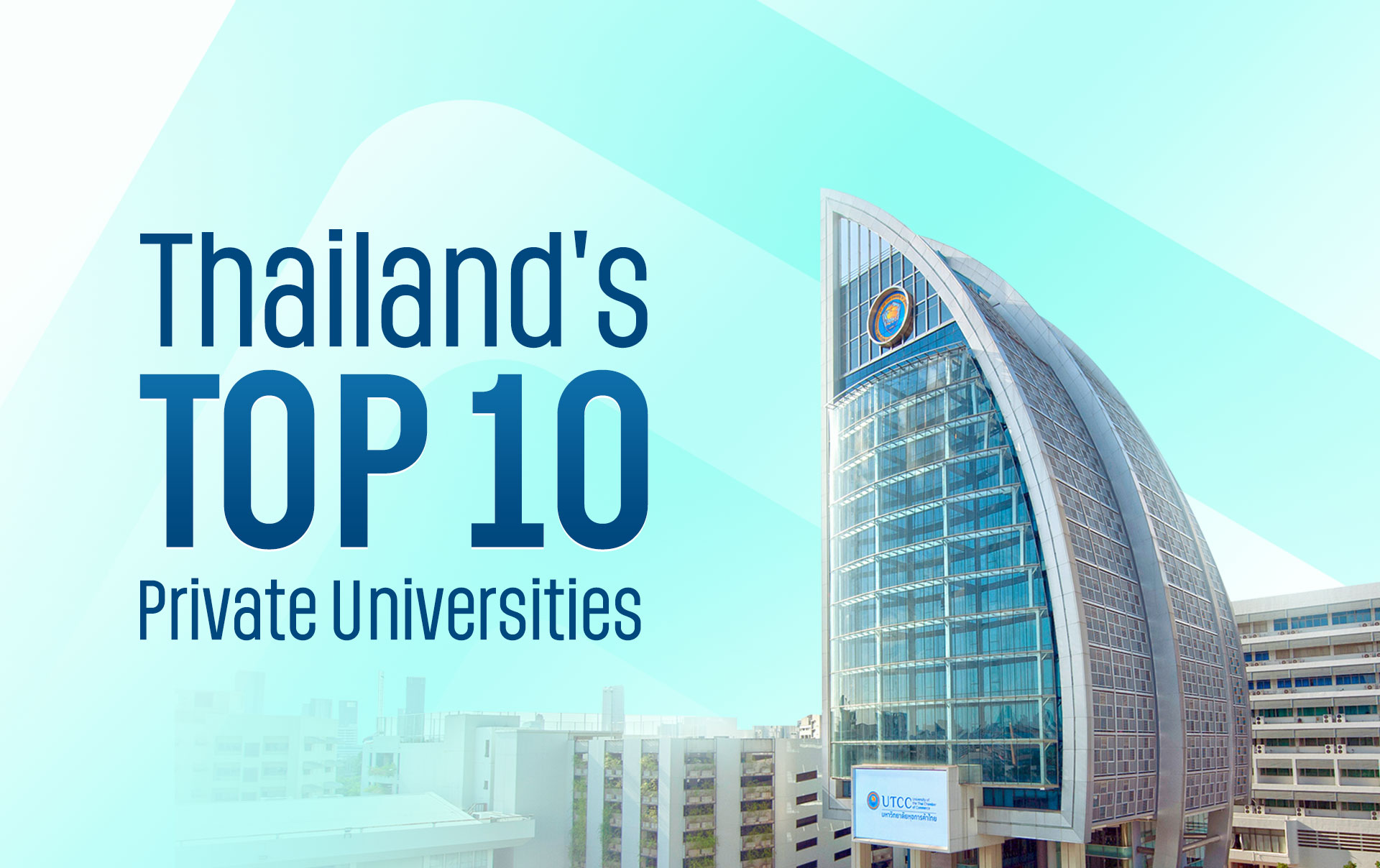
This article involves brief information about Thailand's Top 10 Private Universities.
Thailand's Top 10 Private Universities: Complete Guide for International Students
Thailand's private university sector caters specifically to international students, offering flexibility, English-taught programs, and modern facilities designed for global learning communities. If you're seeking university education with emphasis on international experience and specialized programs, Thailand's private institutions deliver options that public universities simply can't match.
UTCC (University of the Thai Chamber of Commerce): Thailand's Business Pioneer
UTCC holds the distinction of being Thailand's oldest private higher education institution, established in 1940 by the Thai Chamber of Commerce. With the motto "Dare to be Different," the university specializes in business, economics, and accountancy while maintaining strong connections to Thailand's business community. International students gain access to networking opportunities and internships with leading multinational organizations. The International School of Management offers world-class bachelor's, master's, and doctoral programs entirely in English, with the university recently pioneering the expansion of Thai higher education to Myanmar campuses in Yangon and Mandalay.
Stamford International University: Modern Teaching Excellence
Founded in 1995 to meet growing demand for international education, Stamford has grown to serve over 4,000 students from 100 nationalities. As part of the Laureate International Universities Network, Stamford employs innovative teaching methods and became the first Thai university accredited by the International Accreditation Council for Business Education. The university maintains two campuses—Bangkok for urban convenience and Hua Hin for a more relaxed setting—with programs emphasizing graduate employability and market-relevant skills.
Assumption University: Thailand's First International University
Assumption University holds historical significance as Thailand's first international university, founded as a Catholic institution administered by the Gabrielite Brothers. Known for business and international programs, ABAC attracts students seeking a welcoming academic environment with strong cultural values. The main campus in Samut Prakan near Suvarnabhumi Airport offers convenience for international arrivals while maintaining a dedicated educational community focused on holistic student development.
Bangkok University: Creative and Digital Innovation Hub
Bangkok University has carved a niche as Thailand's leading institution for creative and digital media programs. With solid international program offerings, the university attracts students interested in media production, design, and contemporary business applications. The institution maintains modern facilities designed for hands-on creative work and industry-standard training.
Dhurakij Pundit University: Culture and Commerce Combined
Established in 1968, Dhurakij Pundit University integrates academic excellence with preservation of Thai culture and heritage. Programs span Business Administration, Communication Arts, and Law, preparing students for leadership roles while maintaining philosophical commitment to creating value and preserving wisdom. The university's distinctive approach appeals to students seeking education that respects cultural context while embracing modern business practices.
Global Academy at Siam University: International Dual Degrees
Global Academy operates as Siam University's specialized international division, offering unique dual-degree programs in collaboration with universities like University of Victoria (Canada) and La Trobe University (Australia). Located on Siam University's Bangkok campus, the Graduate School provides Master's programs designed for working professionals seeking specialized credentials. Students earn degrees from both Thai and international institutions, a significant advantage for those planning careers across multiple countries.
Harbour.Space Bangkok: Tech and Design Specialization
Harbour.Space brings specialized tech and design education to Bangkok through partnership with UTCC. Focusing on emerging fields like cybersecurity, technology entrepreneurship, and digital design, Harbour.Space attracts students serious about technology careers. The program delivers cutting-edge curriculum taught by industry experts, positioning graduates for roles in Asia's rapidly growing tech sector.
Rangsit University: Comprehensive International Programs
Rangsit University operates Thailand's International College program with particular strength in business, engineering, and liberal arts. With a sprawling campus outside Bangkok and modern facilities, Rangsit offers the university experience many international students expect—spacious grounds, diverse student body, and comprehensive support services. The university maintains strong focus on practical education and industry partnerships.
Raffles College Bangkok: Hospitality and Design Excellence
Raffles College specializes in hospitality management, design, and creative industries education. With connections to the global Raffles network, the Bangkok campus provides practical training in fields where Thailand's tourism and creative industries offer genuine employment opportunities. Students benefit from industry exposure and networking within Thailand's thriving hospitality sector.
Mae Fah Luang University: Northern Thailand's Modern Institution
Located in Chiang Rai in northern Thailand, Mae Fah Luang has become the region's fastest-growing institution with enrollment approaching 15,000 students. Operating a spectacular 800-hectare campus featuring state-of-the-art facilities, MFU offers international programs in a mountain setting that provides an alternative to Bangkok-based education. The university has earned reputation for quality teaching, research output, and community engagement across northern Thailand.
Why Choose Private Universities
Private institutions excel at serving international students through flexible admissions, English-taught programs as standard rather than exception, and infrastructure designed for cultural diversity. They typically offer more intake options, faster admissions processes, and specialized programs targeting specific career paths. Tuition runs higher than public universities but remains substantially lower than Western equivalents—typically USD 5,000-10,000 annually for undergraduate programs.
The trade-off involves prestige perception. While private universities offer genuine quality, employers in Thailand weight public university credentials more heavily for senior roles. However, for international students seeking specific programs, English-medium instruction, and supportive international environments, private universities deliver distinct advantages that make the investment worthwhile.